Table of contents
A quick orientation (what the Oratory visit feels like)
Saint Joseph’s Oratory of Mount Royal sits on the north side of Mount Royal. The dome is visible from far away—and so is the climb. Even if you arrive by transit, expect some stairs and uphill walking (especially if you choose the “scenic” approach).
If your priority is a low-stress half-day visit, your biggest win is choosing a stay where you can reach a major Metro station quickly, then riding transit instead of driving/parking.
Good to know: The calmest experience is usually earlier in the day. Weekends and holidays can be busier, and the hill feels steeper at the end of a long day.
Best areas to stay near Saint Joseph’s Oratory
1) Downtown (Peel / Guy‑Concordia / Atwater)
Best for first‑time visitors who want a simple base for multiple neighborhoods plus easy Oratory transit.
- Fast connections to Snowdon (key transfer point).
- Walkable food + cafés (helpful if your trip is short).
- Good choice if you’re also doing the Underground City (RESO).
2) Snowdon / Côte‑des‑Neiges (closest + practical)
Best for visitors who want to be closest and keep transit simple.
- Snowdon is a major hub (Orange + Blue lines).
- Côte‑des‑Neiges is convenient for the Oratory and for UdeM visits.
- Expect a more residential feel than downtown.
3) Outremont (quiet, beautiful, but less direct)
Best for travelers who value quiet streets and a local vibe.
- Elegant, calm, great for sleep.
- Transit to the Oratory can take a bit more planning than Downtown/Snowdon.
- Great add‑on for walking around Mount Royal.
4) Plateau / Mile End (best “Montreal feel,” not the closest)
Best for travelers planning cafés, shops, and strolls.
- Wonderful for a walkable itinerary (see: Mile End guide).
- Not the closest to the Oratory, but still manageable via Metro.
- Watch for stairs in older walk‑ups.
Simple Metro + bus/walk plan (low stress)
Most visitors find this sequence easiest:
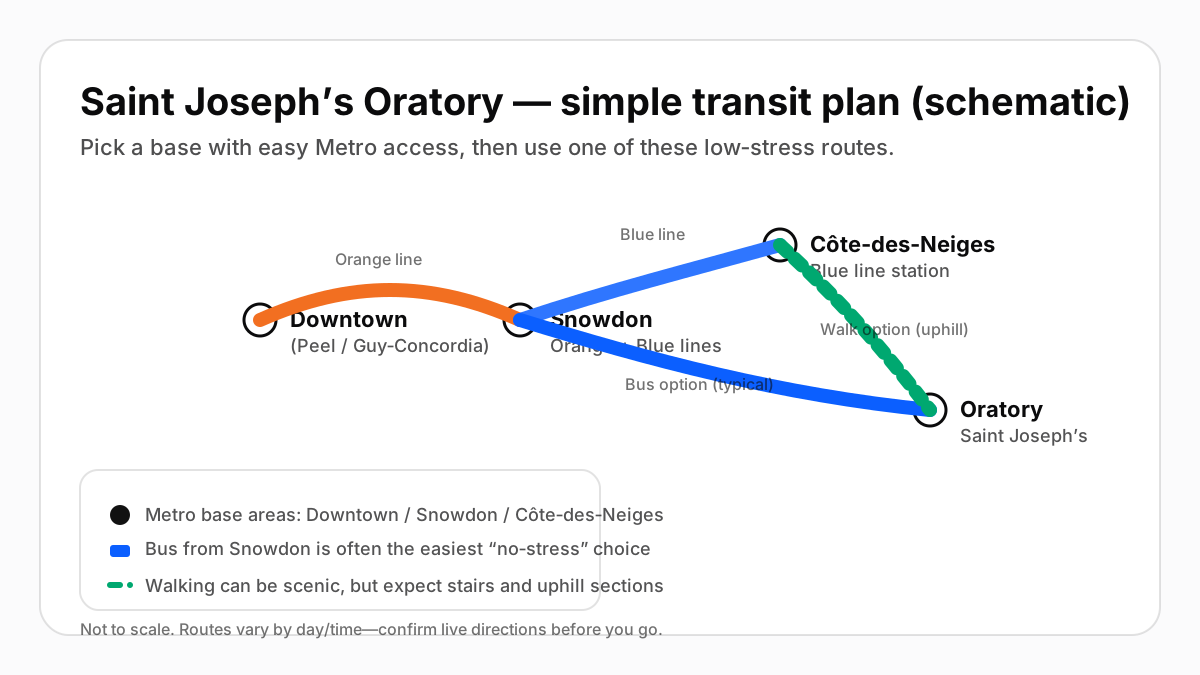
- Get to Snowdon (major hub connecting Orange + Blue lines).
- Choose one last-mile option: a short bus ride when available, or a walk (expect uphill/steps).
For the basics of riding, tickets, and how to plan routes, see: Montreal Metro (STM) guide.

If you’re driving: parking can be doable, but it’s rarely the easiest option on busy days. If you want a “park once” strategy, read: Parking in Montreal guide.
Short‑term rental checklist for this trip
For an Oratory visit (and a short Montreal trip in general), these are the booking details that reduce friction:
- Metro access: Can you reach a Metro station quickly on foot?
- Sleep quality: Is the unit on a quieter street? (See: quiet sleep checklist.)
- Entry simplicity: Clear self check‑in steps and a backup plan. (See: self check‑in guide.)
- Stairs/elevator: Older buildings can mean stairs—important after a hill-heavy day.
- Kitchen basics: Even a simple breakfast setup makes short trips easier. (See: amenities checklist.)
Want the easiest version of this trip? Book a professionally managed stay with clear entry steps and a Metro-first location.
Related posts
FAQ
What’s the best area to stay for Saint Joseph’s Oratory in Montreal?
If you want the easiest transit, stay Downtown or near Snowdon/Côte‑des‑Neiges so you can reach the Metro quickly and keep the trip simple. Côte‑des‑Neiges is typically the closest practical base.
Is Saint Joseph’s Oratory walkable from downtown Montreal?
It’s usually too far for a comfortable walk for most visitors. The simplest approach is Metro to Snowdon, then a short bus ride or an uphill walk depending on your preference and conditions.
Do I need a car to visit the Oratory?
No. Transit is often the least stressful option, especially on busy days. If you do drive, plan parking carefully and consider a “park once” strategy.
How much time should I budget for a visit?
Many visitors plan for 2–4 hours including transit and time for stairs/viewpoints. If you’re adding Mount Royal walking, budget longer and wear comfortable shoes.
What should I prioritize when booking a short-term rental for this visit?
Prioritize a Metro-first location, quiet sleep, and simple self check‑in. Those three factors make short trips smoother than being “closest on a map.”