Table of contents
What “noise” actually means in Montreal stays
When guests say “it was noisy,” it’s usually one of these:
- Nightlife noise (bars, patios, late-night foot traffic) — mostly Fri/Sat but can be daily in some pockets.
- Street noise (buses, delivery trucks, sirens) — worse on arterial roads.
- Building noise (thin walls, footsteps, doors) — more about construction quality than location.
- Mechanical noise (HVAC, fridge, radiators, elevator hum) — very unit-specific.
- Construction (renovations next door, roadwork) — can change quickly and is hard to predict without asking.
Rule of thumb: a “central” location can still be quiet if the bedroom faces a courtyard or a calmer side street.
Where quiet stays are usually easiest (by vibe)
Rather than naming one “quietest neighborhood,” use this vibe filter when you browse:
Calm residential streets (best baseline)
Look for listings that describe tree-lined residential blocks, courtyards, or “set back from the street.” These are often the easiest sleep wins.
Old Montreal / downtown cores (great, but micro-location matters)
Totally workable — just avoid units directly on nightlife streets. Prioritize a listing that states the bedroom is quiet (or faces inward).
Near major arterials
If a place sits on a big road, ask about double-pane windows and whether the bedroom is set back.
Above restaurants/bars
Proceed only if you’re a deep sleeper. Patios + closing time can be the loudest pattern of all.
If you’re choosing between two similar listings, prioritize quiet sleep over one extra block of walkability — it’s the difference between a “nice trip” and a “recovery trip.”
Questions to ask before you book (copy/paste)
Send these questions as a single message. Good hosts can answer quickly and clearly:
- Bedroom orientation: Does the bedroom face the street, an alley, or a courtyard?
- Windows: Are the bedroom windows double-pane? Any known street noise?
- Building sound: Are the walls/ceilings well insulated? Any common complaints about footsteps/doors?
- HVAC: Is there any noticeable HVAC/fridge/radiator noise at night?
- Construction: Is there any planned construction nearby or in the building?
- Quiet hours: Does the building have quiet hours, and are they enforced?
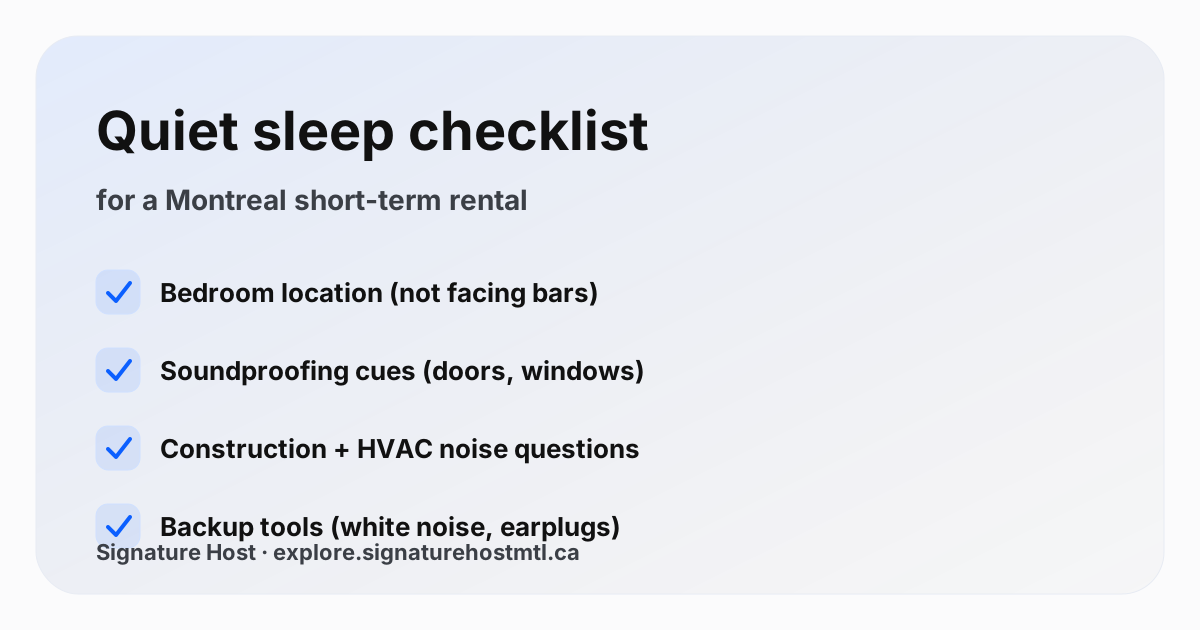
Quiet-sleep checklist (fast)
- Bedroom not over a patio/bar (especially if you’re staying Fri/Sat).
- Prefer inward-facing bedrooms (courtyard/back of building).
- Ask about windows (double-pane is a strong signal).
- Confirm AC/heat behavior (some systems cycle loudly).
- Bring backups: earplugs + a white-noise app (small effort, big payoff).
Booking tip: If sleep is your #1 priority, choose a professionally managed stay that is explicit about noise expectations and quick to answer questions.
Easy tools that help you sleep (even if it’s not perfect)
- White noise (phone app or small travel machine) smooths out inconsistent street sounds.
- Earplugs help with peak noise (closing time, garbage collection).
- Sleep mask is underrated in bright-city rooms.
- Room choice: if there are two bedrooms, take the one farther from the street.
Related posts
- Montreal short‑term rental amenities checklist
- Montreal public transportation (STM) guide
- Is Montreal safe for tourists?
- Parking in Montreal (visitor guide)
Looking for a stay with a smooth arrival? See: Montreal airport to downtown guide.
FAQ
What is the quietest area to stay in Montreal?
It’s less about one single neighborhood and more about street choice and bedroom orientation. A central neighborhood can be quiet if your bedroom faces inward, while a “quiet” neighborhood can still be loud if you’re on a busy road.
Is Old Montreal noisy at night?
Some streets can be lively (restaurants, bars, events), but many buildings have calmer sides or interior bedrooms. Ask if the bedroom faces the street or a courtyard, and whether guests have mentioned nightlife noise.
How do I avoid construction noise in a short-term rental?
You can’t fully predict city work, but you can reduce risk by asking directly about planned construction in the building or immediate vicinity, and choosing listings that communicate proactively.
Do higher floors mean quieter sleep?
Often yes for street noise, but not always. Higher floors can still have mechanical noise (HVAC) or building noise. The best signal is a listing that can describe the bedroom side and window quality.
What should I pack if I’m sensitive to noise?
Pack earplugs, a sleep mask, and a white-noise app. These tiny items solve most “one-off” noise problems (sirens, footsteps, garbage pickup) without changing your itinerary.