
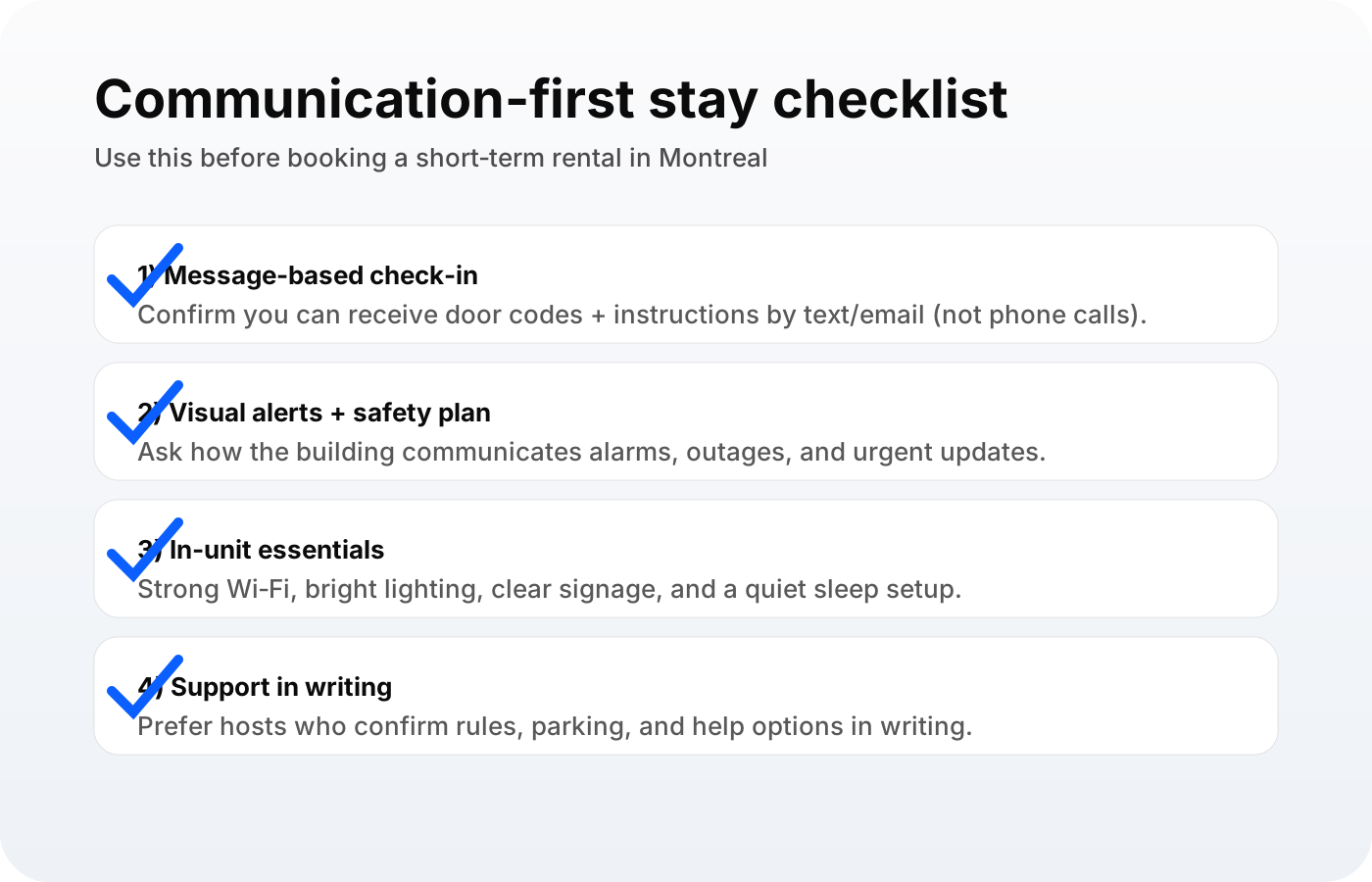
What matters most when booking (it’s not just the neighborhood)
- Written instructions: door code, Wi‑Fi, building entry, parking, and house rules should be confirmed in writing (text/email/app).
- Message-first support: pick a host/company who can troubleshoot by messaging fast—especially for late arrivals.
- Clear access steps: “how to enter the building” should be unambiguous (which door, which buzzer, which floor, which lockbox).
- Quiet sleep setup: prioritize good windows + calmer streets if you’re sensitive to night noise or vibration.
Easy Montreal bases (walkable + straightforward logistics)
Montreal is very navigable without a car. For many travelers, the simplest plan is to stay where you can do most of your trip on foot and use the metro as a backup.
- Downtown / Ville‑Marie: predictable transit, dense services, and easiest “work trip” logistics.
- Old Montreal: walk-first sightseeing base; confirm building access details carefully (older buildings vary).
- Plateau edge (near Sherbrooke / Mont‑Royal areas): classic neighborhood feel with good walkability; confirm stairs if that matters for your group.
- Griffintown: newer buildings can mean simpler access + elevators; confirm construction/noise if you’re a light sleeper.
Communication-first booking checklist (copy/paste)
- Check‑in: “Can you send the full check‑in steps and codes by message (text/email)?”
- Support: “If something doesn’t work at arrival, what’s the fastest message channel and response time?”
- Safety + updates: “How does the building share urgent notices (fire alarm, outages, maintenance)?”
- TV/captions: “Does the TV support captions/subtitles (CC) on streaming apps?”
- Door/lock reality: confirm whether entry is keypad, lockbox, or in‑person, and whether the buzzer/intercom is required.
- Sleep: ask about street exposure and whether the bedroom faces a busy road or nightlife block.
On-the-ground tips (Montreal-specific, low-stress)
- Keep addresses shareable: save your building address + unit entry steps in a note you can access offline.
- Use map pins: pin your door/entry location (some Old Montreal streets are confusing at night).
- Have a backup arrival plan: if you land late, choose a stay with keypad entry rather than an in-person handoff.
- Choose predictable transport: metro + walking works well; for door-to-door, rideshare is usually simpler than bus transfers.
Related reads
FAQ
What’s the easiest area to stay in Montreal for simple logistics?
Downtown/Ville‑Marie is usually the easiest: dense services, straightforward transit, and quick access to many neighborhoods. Old Montreal is great for walk-first sightseeing, but confirm entry steps carefully (older buildings vary).
What should I ask a host to avoid communication problems?
Ask for written check‑in instructions and confirm support is available by message at arrival time. The most important detail is how you’ll enter the building (buzzer/intercom, lockbox, keypad) and how fast someone can help if something fails.
Is it better to book direct instead of via an OTA?
Often yes—direct booking can mean clearer communication, fewer platform relays, and simpler support. You can check availability here: https://explore.signaturehostmtl.ca/reserve
Does a “newer building” matter?
It can. Newer buildings are more likely to have keypads, elevators, and predictable access steps. Older buildings can be great too—just confirm entry details, stairs, and sound insulation in advance.