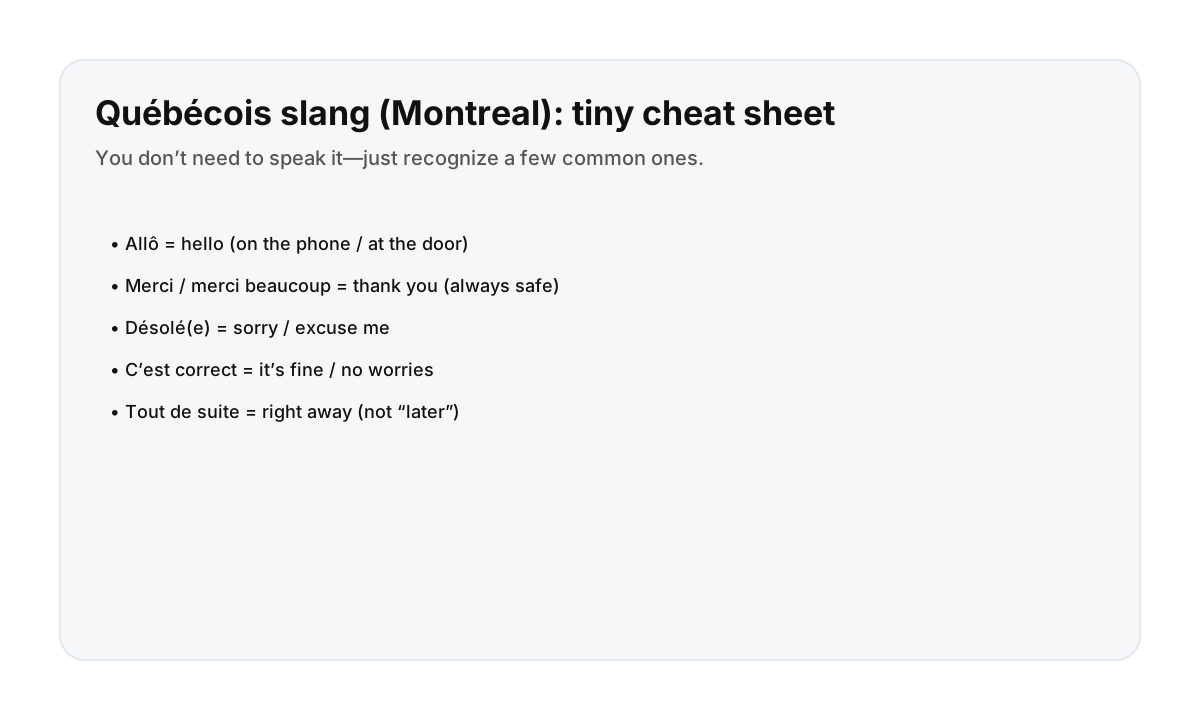

5 words you’ll actually hear (and what they mean)
- Allô = “hello” (often on the phone, sometimes at the door)
- C’est correct = “it’s fine / no worries”
- Tout de suite = “right away” (not “later”)
- Magasiner = “to shop”
- Dépanneur = convenience store
What to say instead (simple + polite)
- Bonjour (hello / good day)
- Excusez‑moi (excuse me)
- Merci beaucoup (thank you very much)
- Parlez‑vous anglais ? (do you speak English?)
- Je ne comprends pas (I don’t understand)
Tip: in Montreal, a friendly bonjour is often the smoothest opener—then switch to English if needed.
Where slang shows up most (so you’re not surprised)
- Cafés / fast casual: quick greetings and informal phrasing
- Shops: “magasiner”, “c’est correct”, informal “merci”
- Transit: announcements are standard French, but staff may speak casually
Direct booking helps everything feel simpler
A predictable base (clear check‑in + local instructions) makes language friction disappear—especially when you’re tired, late, or juggling plans.
FAQ
Do I need to speak French in Montreal?
No—many people are bilingual. But starting with bonjour and staying polite goes a long way.
Is Québécois slang different from France French?
Yes. The basics are the same, but some common everyday words and expressions differ. You don’t need to use them—just recognizing a few helps.
What’s the safest phrase to ask for English?
Parlez‑vous anglais ? (Do you speak English?)