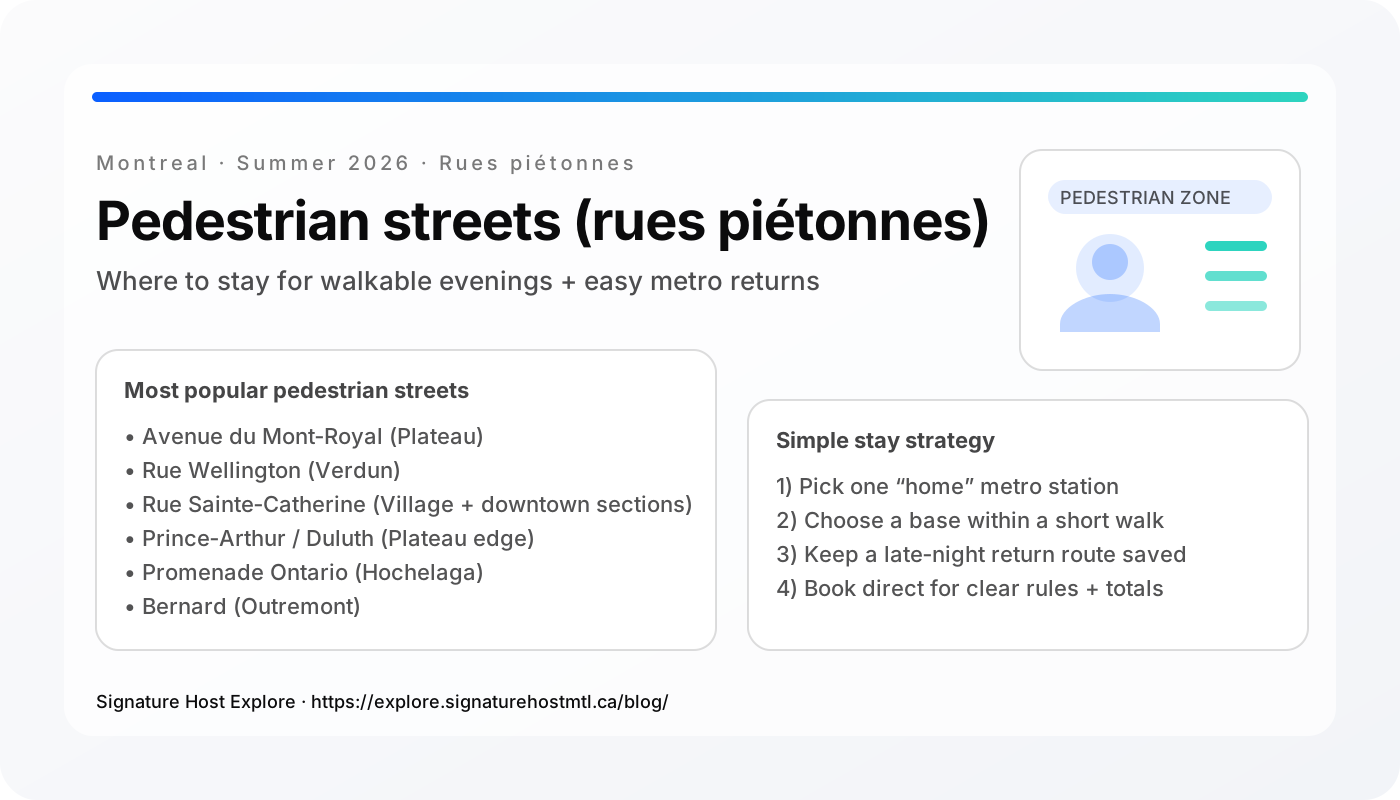

Best Montreal pedestrian streets (rues piétonnes) to plan around
Pedestrian-only blocks change each summer, but the most reliable areas tend to repeat. Use this list as a planning shortcut: pick the vibe you want, then choose a base with a simple metro return.
Avenue du Mont‑Royal (Plateau Mont‑Royal)
- Best for: classic Montreal summer evenings (patios, people-watching, casual bars).
- Stay vibe: lively—great energy, but verify quiet-sleep basics if you’re sensitive to noise.
Related: Plateau Mont‑Royal neighborhood guide and where to stay near Parc La Fontaine.
Rue Wellington (Verdun)
- Best for: a neighborhood feel with great food, plus easy access to canal paths.
- Bonus day plan: pair it with a walk or bike ride along the canal (metro-first, then stroll).
Related: where to stay near Verdun Beach and BIXI Montreal guide.
Rue Sainte‑Catherine (Village + downtown sections)
- Best for: big-city energy, events, and easy connections to multiple lines.
- Transit win: this is one of the simplest areas if you’re staying car-free.
Start here if transit planning stresses you out: Montreal Metro guide and public transportation overview.
Promenade Ontario (Hochelaga / HOMA)
- Best for: local restaurants, a more residential vibe, and a “live like a Montrealer” feel.
- Easy add-on: Olympic District attractions are close by metro.
Related: Maisonneuve Market guide and where to stay near Olympic Stadium.
Prince‑Arthur / Duluth (Plateau edge)
- Best for: dinner-first evenings and short walks to parks.
- Heads up: the Plateau is very walkable, but it’s not flat—pack comfortable shoes.
Bernard (Outremont)
- Best for: a calm, upscale neighborhood vibe with good cafés.
- Good match for: longer stays or work trips where you still want easy evening walks.
Where to stay (a simple plan that works for pedestrian streets)
The goal is to make your nights repeatable: dinner → wander → get home without a complicated transfer.

Option 1: Stay in the Plateau (best “rues piétonnes” experience)
- Choose this if: you want to walk to Mont‑Royal Ave most nights.
- Simple metro plan: pick one station you’ll use daily (for example, Mont‑Royal / Sherbrooke area) and build around it.
- What to verify: stairs (many buildings), window soundproofing, and quiet hours.
Option 2: Stay in Verdun (canal-first days + pedestrian nights)
- Choose this if: you want neighborhood restaurants plus easier daytime walks.
- Simple metro plan: base yourself near a Green Line station (De l’Église / Verdun area) so Downtown stays simple.
Option 3: Stay Downtown (best for mixing multiple neighborhoods)
- Choose this if: you want to sample different pedestrian streets without changing bases.
- Simple metro plan: stay near a station cluster so late returns are low-stress.
Related: Downtown Montreal Airbnb alternative (book direct checklist) and Airbnb vs booking direct in Montreal.
FAQ
What does “rue piétonne” mean in Montreal?
A rue piétonne is a street (or section of a street) that becomes pedestrian-only for the summer—more patio space, slower vibes, and lots of walking.
What’s the easiest area to stay for pedestrian streets?
If you want a “walk out the door and you’re there” experience, the Plateau is the simplest choice. If you want variety across neighborhoods, Downtown is the easiest base for metro connections.
Will pedestrian streets be noisy at night?
They can be lively, especially on weekends. If quiet sleep matters, verify quiet hours, window soundproofing, and bedroom placement (courtyard-facing tends to be calmer). This checklist helps: quiet sleep in Montreal.
Do I need a car to enjoy Montreal’s pedestrian streets?
No—most visitors are happier going metro-first. Start with: Montreal Metro guide and STM overview.
How do I book a short-term rental near pedestrian streets without surprises?
Choose a base with one “home” metro station, verify rules (quiet hours / visitors / smoking), and book direct when possible for clear totals and one support channel. You can check availability here: https://explore.signaturehostmtl.ca/reserve.