
On this page
The most common tow triggers in Montreal (visitor edition)
Exact rules vary by street and borough, but these are the patterns that catch visitors:
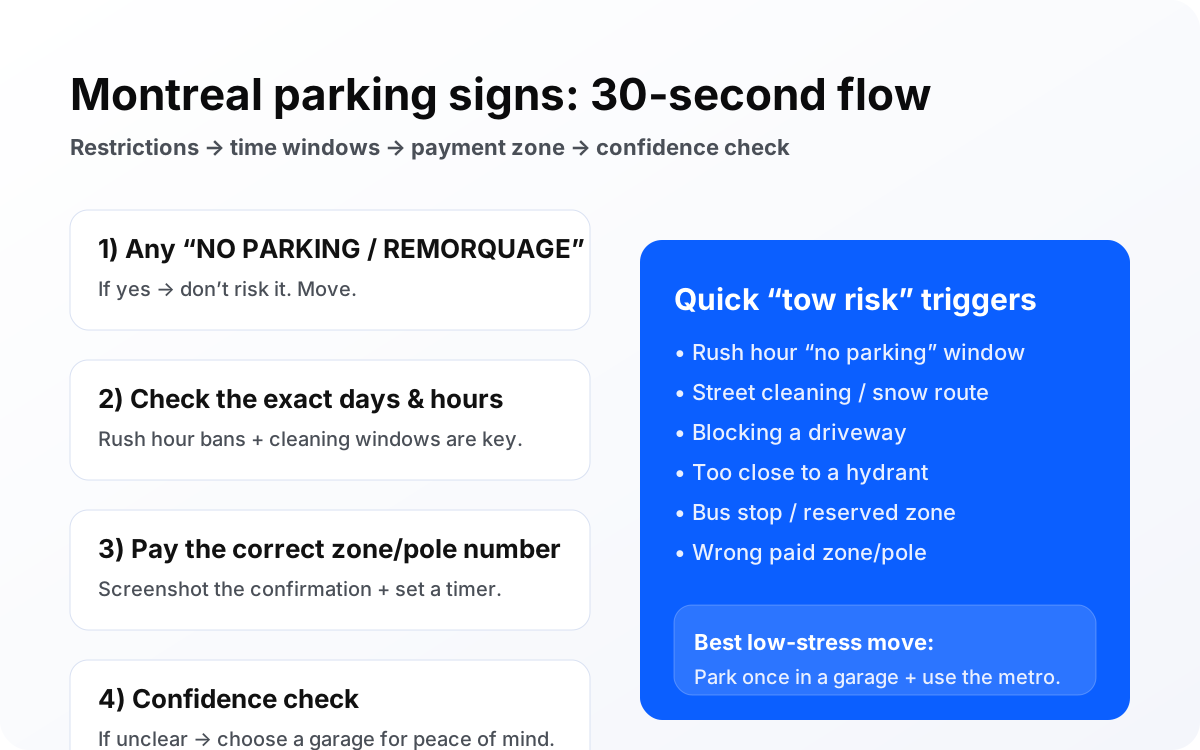
- Rush-hour “no parking” windows on main roads (it can be a tow, not just a ticket).
- Street cleaning windows (often posted on signs; sometimes seasonal).
- Snow routes in winter (special restrictions, sometimes temporary).
- Reserved zones (loading, bus stops, permit-only, or signed exceptions).
- Blocking a driveway (even “just a little”).
- Too close to a fire hydrant (don’t assume you’re safe).
- Paying the wrong zone/pole number at a pay station/app.
Visitor guidance only: the sign is the rule. If the sign feels ambiguous, choose a clearer spot.
A 60-second sign-reading checklist (use this every time)
- Look for “NO PARKING / NO STOPPING / REMORQUAGE (towing)” first. If you see it for your time window, move.
- Confirm the exact days + hours. Don’t skim—rush-hour windows are easy to miss.
- Scan for street cleaning / snow route notes. If you’re unsure, don’t risk an overnight.
- Check the “space around you.” Hydrant, driveway, corner, bike lane, bus stop… if it feels tight, pick another spot.
- If paid parking applies: pay the correct zone/pole number. Screenshot your confirmation.
- Set a timer. Alarm 10–15 minutes before expiry saves the most common ticket.
If you get a parking ticket in Montreal: what to do first
Do these steps immediately (it takes 2 minutes and gives you options later):
- Photograph everything: the ticket, your car position, and the nearest signs (including any “second” sign on the pole).
- Write down the basics: street, nearest cross street, and time.
- Don’t move until you have the photos (once you move, you lose evidence).
If you’re towed in Montreal: the fastest recovery plan
Start with 311 (Montreal’s info line). They can often tell you which tow lot your car was taken to and what to do next.
- Call 311. If your phone can’t dial 3-digit numbers on roaming, ask your host or a nearby business to help.
- Have your location details ready: street + cross street + approximate time.
- Ask for the tow lot address, hours, and what ID/payment is required.
- Go as soon as you can—storage fees can add up.
If you’re driving in Montreal, a calm base helps: clear check-in, better sleep, and less “parking roulette.”
The low-stress strategy for most visitors: garage + metro
If you’re staying a few nights, the simplest “avoid tickets” approach is often:
- Drive in once and park in a garage.
- Use the metro for most in-city trips.
- Only street-park short sessions (and only when signage is crystal clear).
This works especially well if you’re visiting Old Montreal, Downtown, Plateau, or Griffintown—areas where signs are dense and enforcement is strict.
FAQ
What’s the most common reason visitors get towed in Montreal?
Missing a rush-hour no-parking window or parking during a posted street-cleaning/snow-route restriction. When in doubt, park somewhere with simpler signage or use a garage.
Should I trust Google Maps “street parking” suggestions?
Use them as a hint, not a rule. Montreal is sign-driven: the sign on the street is what matters, and restrictions can change block to block.
What should I do first if I get a ticket?
Take photos of the signs, your car position, and the ticket. Note the time and cross street. Then decide whether to pay or contest using the ticket details.
Who do I call if my car is towed in Montreal?
Call 311 (the city info line) and ask which tow lot your vehicle was taken to and what ID/payment is required.
Where can I book a short-term rental directly?
You can book direct here: https://explore.signaturehostmtl.ca/reserve.