Table of contents
What “coworking” means in Montreal (day pass vs membership)
Most coworking spaces in Montreal offer a few standard options. The best choice depends on your schedule and how many calls you’ll take.
- Day pass: ideal for 1–3 days, or when you want flexibility.
- Weekly pass: great for a single work week.
- Hot desk membership: first‑come seating; good if you arrive earlier in the day.
- Dedicated desk / private office: best if you need quiet calls or team space.
Reality check: If you’ll do multiple video calls per day, prioritize spaces with phone booths or bookable rooms—otherwise you’ll spend your day hunting for quiet corners.
Best coworking hubs (and where to stay nearby)
Instead of choosing a space randomly, use this approach: pick your hub based on your meetings + vibe, then stay inside an easy commute radius.
Hub 1
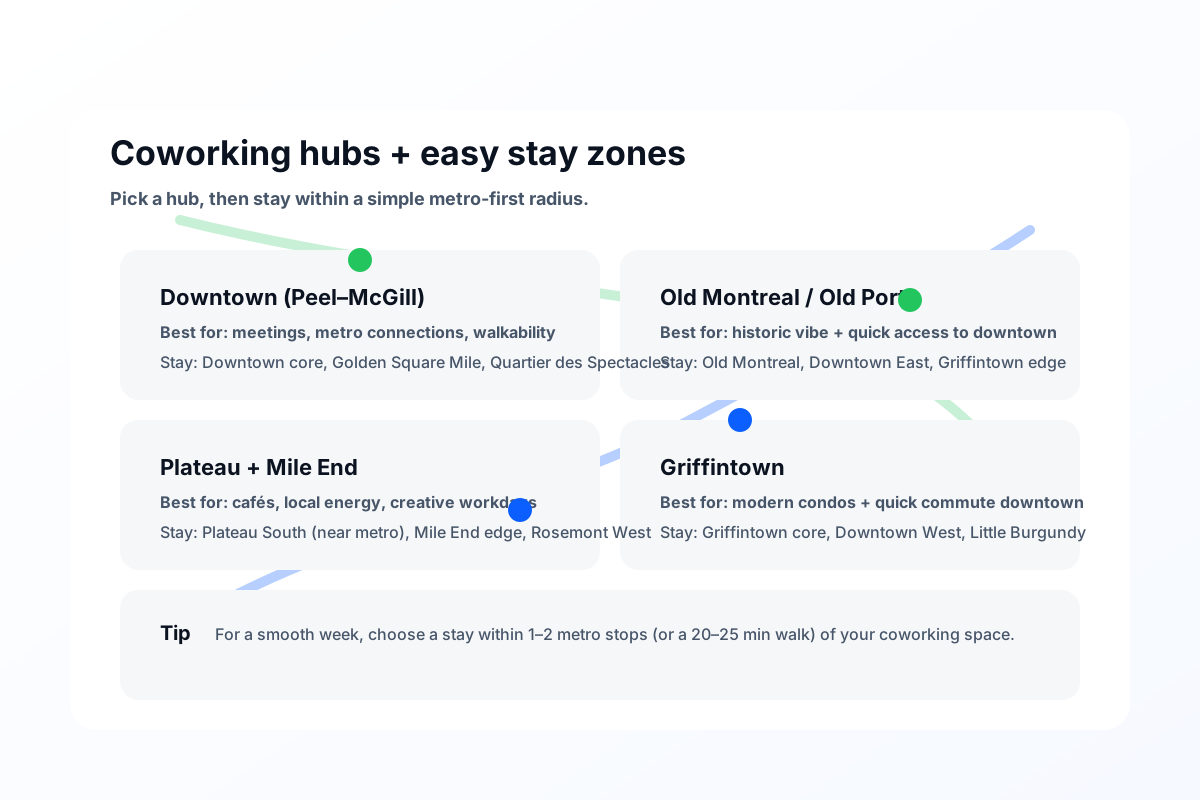
Downtown (Peel–McGill–Bonaventure)
Best for: meetings, predictable transit, and easy access to restaurants after work.
Where to stay: Downtown core, Golden Square Mile, or Quartier des Spectacles for a simple commute.
Hub 2
Old Montreal / Old Port
Best for: a more “destination” feel while staying close to downtown.
Where to stay: Old Montreal itself, Downtown East, or the Griffintown edge.
Hub 3
Plateau + Mile End
Best for: cafés, creative energy, and a local neighborhood rhythm.
Where to stay: Plateau South (near a metro station) or Mile End edge for faster access.
Hub 4
Griffintown
Best for: modern condos, quick downtown commutes, and easy walks along the canal.
Where to stay: Griffintown core, Downtown West, or Little Burgundy.
Tip: if you’re staying longer (weekly/monthly), choose a place with laundry and a real desk. It’s the difference between “working here” and “living here.”
How to choose the right space (Wi‑Fi, calls, hours)
Before you pay for a pass, confirm these basics:
- Hours: some spaces are business-hours only; others offer 24/7 options.
- Call setup: phone booths, meeting rooms, and noise expectations.
- Wi‑Fi quality: ask if there’s a guest network and typical speeds (especially if you upload large files).
- Ergonomics: chair comfort matters more than you think for a 5-day stretch.
- Access: is it close to a metro station, or will you rely on buses/ride-shares?
Short‑term rental checklist for remote workers
If you’re pairing coworking with a furnished apartment, look for:
- Fast, stable Wi‑Fi (and a backup option like a hotspot).
- A dedicated workspace (desk + chair, not just a dining table).
- Quiet sleep (solid windows, good blackout, or a calmer street).
- Kitchen basics so you can do simple breakfasts and “reset” meals.
- In‑unit laundry for weekly stays.
Transit strategy: metro-first planning
Montreal is easiest when you plan around the metro. For remote-work stays:
- Choose your coworking hub near a metro station.
- Stay near a metro station on the same line or an easy transfer.
- Avoid “two transfers” commutes for a daily routine—you’ll feel it by day 3.
Related read: STM fares & OPUS card guide.
Related posts
FAQ
Are coworking spaces in Montreal good for video calls?
Yes—if the space has phone booths or bookable meeting rooms. If you’ll be on calls daily, confirm the call setup before buying a pass.
What’s the best area to stay for a remote-work week in Montreal?
For most travelers, Downtown is the easiest all-around base because of metro connections. If you want more neighborhood vibe, choose Plateau South or Mile End edge—just stay close to a metro station.
Do I need a car if I’m coworking in Montreal?
Usually no. A metro-first plan (and occasional rideshare) is typically simpler than parking, especially if you’re staying centrally.
Should I work from my apartment instead of coworking?
If your stay has a great desk and you take few calls, working from the apartment can be perfect. Coworking helps when you want a clearer work/life boundary, better ergonomics, or more reliable quiet for meetings.
How do I book a furnished apartment directly?
You can check dates and book online here: https://explore.signaturehostmtl.ca/reserve.